Blog.
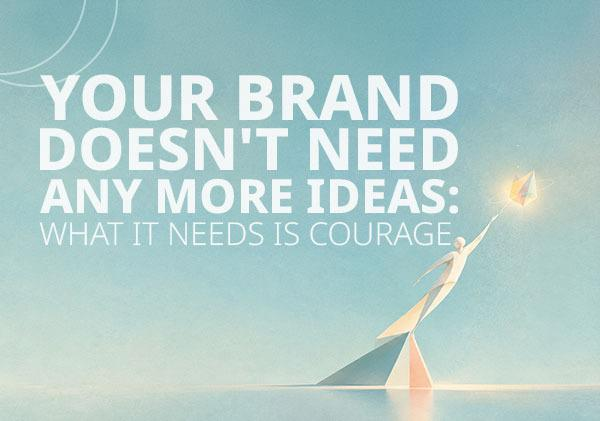
The desire to distinguish yourself in a sea of similar brands through bold, disruptive work has become a blanket claim, since only a few actually do so.
The first answer that might pop into someone’s mind is that the clients reject excellent ideas before they are even birthed. Agencies love this explanation as it shifts the blame to the other side.
Yet if you honestly do a deep dive into how an idea comes to fruition, a different picture can emerge. Most of the envelope-pushing work agencies develop never reaches the client. It dies a silent death within the agency, is diluted during an internal discussion, or is used as a basis to launch a campaign similar to another successful one; the original idea rarely gets the effort it deserves. The lack of courage lies with neither the client nor the agency, but with both, in a cycle fed by both.
The Cycle
This is how it plays out.
A client sends a brief, and the team’s creative minds are put to the test. Someone from the team proposes something truly original; no one has asked the client their thoughts yet, but between an internal discussion and the client presentation, someone floats the idea that the client would never go for something like this. Through market research and by informing yourself about a brand’s identity, you speak for the brand as a precaution and add the first speck of dilution to the idea.
Three ideas are presented: a bold one, a safe option, and a middle ground the client is expected to choose. It tests the boundaries just a little without ever venturing beyond the norm. When the client chooses the compromise, it actualises an assumption that shouldn’t have existed in the first place.
Each side remains untested, no real risk is taken, no truly safe iteration is produced, and the work is churned out in a blasé manner.
Self-Censorship in Agencies
The reasons agencies retreat pre-emptively are rarely due to a lack of conviction.
Courage and articulateness need to pair up with a real ability to defend a bold idea on a client call, and the fact that it’s simpler to avoid the conversation should be nipped in the bud. Sometimes a single negative experience becomes the norm. An ambitious proposal was rejected two years ago, and that rejection cast a cloud over every idea thereafter. Internal discussions are motivated by smooth approvals. Smooth approvals, while attention- and reward-worthy, do not address whether the work actually performs well. Teams begin to develop proposals that will please the client rather than ones grounded in actual belief, and that becomes a habit.
Talent and creativity have nothing to do with this; it’s built into how approval chains function in the day-to-day.
Why Brands Flinch
Clients aren’t without blame; their faults and reluctance come packed in a by-the-numbers structure.
The client’s POC has one primary job. They mustn’t embarrass anyone or the company in front of senior management. This motivation makes people operate differently than when they want a campaign to work brilliantly. Bold ideas usually come with a real contingency plan. An agency can suggest something experimental, but without a well-thought-out rollout, trial period, or contingency, the client risks their reputation on faith. Too many cooks often spoil the broth; this is equally relevant here. When a review adds too many people, the idea is adjusted to accommodate objections rather than remaining the best option. A single campaign failure, regardless of the reasons, tends to get labelled as an unsuccessful bold risk.
Breaking the Cycle
If both parties need more courage, the fix isn’t simply clients trusting their agencies more.
The agency should learn the art of progressive overload. Testing the waters with small risks, presented with full conviction. No client will ever agree to a complete shift on the first go; however, by treading the tides on a smaller scale, trust can be built over time. Bold ideas should be presented, as they are, boldly, not sandwiched in a neat, palatable package. The risk plan should exist in unison: a pitch that is self-aware of what it’s trying to do and that states the risks wins trust. A nascent change that should be made first & foremost is to replace “let’s not even try” with “let’s find out”.
A brand could bring honesty to the table and ask which version they weren’t shown. This reveals what was filtered out, and portrays a change in mindset: “Boldness can be considered”. While democratic decisions are good, centralising the final go means the decision becomes an impact decision rather than a consensus decision. An underperforming experiment must be analysed as a data point, not a final call.
The Real Ask
Boldness isn’t an innate skill, nor is it one that arises from certain clients or agencies; it is developed slowly through a consistent process.
It is a fact that boldness is not a parameter for judging the skill or output of any creative agency, but that a certain idea can reach the client in an unchanged form, convincingly backed, shows the presence of a channel for creativity in its purest form. Clients who receive such work generally have a process to ensure such an idea gets a chance to fight its case.
Perhaps it’s time to stop questioning who had the idea killed and instead start asking why it never left the building in the first place.
Tags:
Blogs
More Stories
In India’s dynamic business landscape, a brand is far more than its logo, tagline, or colour palette. It’s the sum of promises kept, experiences delivered, and trust earned over time. Whether it’s a Bengaluru fintech startup or a century-old textile house in Surat, brands that thrive are those that go deeper than design — they live in the minds and hearts of their customers.
 Amit Bailke
In today’s noisy marketplace, your brand isn’t just competing with other businesses – it’s competing with every post, ad, and notification that distracts your audience. That’s why the advertising agency you choose can be the single most important decision for your marketing success.
Amit Bailke
Many marketing projects derail not because the agency lacks talent, but because the client didn’t clearly define what they needed in the first place. Think about it — if your team and your agency aren’t aligned on the starting point, the goal, and the parameters, you’ll waste time, burn budget, and risk getting work that doesn’t hit the mark.
Amit Bailke
We’ve all wondered at some point — does branding really make that much of a difference? A common myth is that branding is only for big companies with deep pockets. In reality, it’s not rocket science. When brands make informed, consistent decisions, consumers feel more confident engaging with them
Amit Bailke
We’ve all wondered at some point — does branding really make that much of a difference? A common myth is that branding iHumour has always held a special place in Indian marketing. From Amul’s iconic topical billboards to Fevicol’s legendary one-liners, humour has shaped the way brands win hearts in this country. Humour isn’t just a creative choice—it has become a strategic tool for brands looking to cut through overwhelming digital noise.
Amit Bailke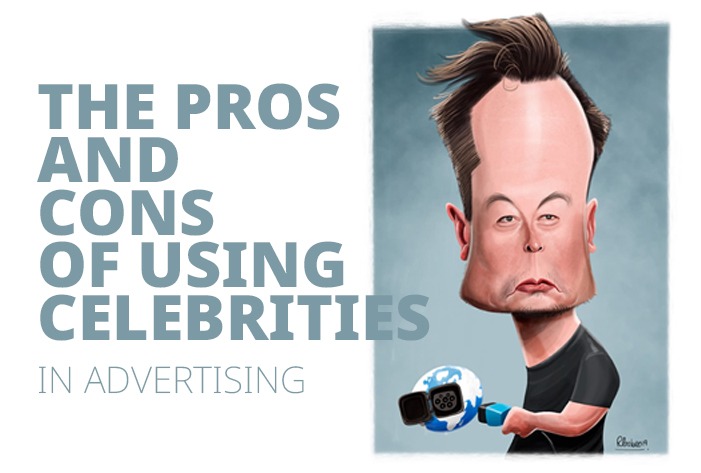
Celebrity endorsements are common Indian advertising. In a country where film stars, cricketers and digital influencers enjoy massive admiration, linking a brand with a famous personality can instantly drive visibility, trust and desirability. Although, it must be executed carefully, so that it enables brands to leverage fan communities and create emotional connections that conventional advertising struggles to achieve.
Amit BailkeThe desire to distinguish yourself in a sea of similar brands through bold, disruptive work has become a blanket claim, since only a few actually do so. Most of the envelope-pushing work agencies develop never reaches the client — it dies a silent death within the agency, in a cycle fed by both sides. The lack of courage lies with neither the client nor the agency, but with both.
 Mihir Modak
A new client has been onboarded and says, “Surprise us. No idea is a bad idea.” At first glance, this is the dream brief: no red tape, no strict obligations, pure creative freedom. But “Surprise me” is an incomplete instruction packaged as a complete one, and it ends up wasting exactly what it was meant to save: time.
Mihir Modak
It takes a lot of effort to make things seem effortless. “Daag Acche Hain” doesn’t sound like a typical tagline — it sounds like an actual conversation, and that is exactly why it works so well. The best taglines don’t sound baked in a creative agency, but that ease comes with hard work.
Mihir Modak