Blog.
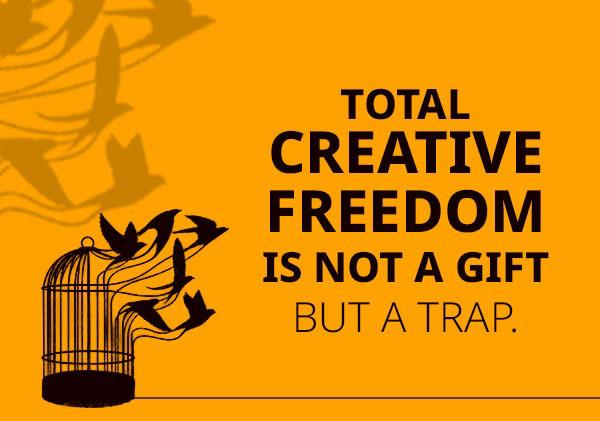
A new client has been onboarded; everyone is excited for a new challenge, a new way to put their skills to the test. The client arrives for the briefing meeting, disregards all the questions, and says, “Surprise us. No idea is a bad idea.”
At first glance, this is the dream brief: no red tape, no strict obligations or blueprint, and no cooks spoiling the broth before it’s even made. Pure creative freedom.
Everyone rejoices at the fact that they’ve finally found a client who won’t be a barrier to their creative expression. They go to the drawing board and then, nothing. Where do we start? In actuality, this “brief” ends up wasting exactly what it was meant to save: time.
The Brief That Isn’t a Brief
While “Surprise me” might come across as a vote of utter confidence, in reality, it is an incomplete instruction packaged as a complete one.
While the client and the agency might truly believe the “No idea is a bad idea” concept by simply throwing ideas at the wall to see what sticks, the client actually has an idea of exactly what they want to see. Their idea of good is there in their mind, but just hasn’t been articulated or expressed. They might have a kernel of an idea from something a competitor did, a style they want to incorporate with their quality, or a statement they want to make about the brand that they just aren’t confident enough about yet. Not giving a brief doesn’t eliminate the internal evaluation; it just puts the onus of scratching an unidentified itch on the agency.
When actual surprising work is delivered, the client says, “Maybe not this,” and steps back, waiting for the agency to figure it out.
Constraint Is a Creative Gift
Restriction is where creativity is born. Infinite resources often lead to unfocused “blue sky” ideas, whereas constraints can lead to focused choices and practical development. As the old adage goes, it takes two to tango; creativity needs something to work against: a word limit, a set palette of colours, or a deadline.
Take Fevicol as an example: for decades, the brand communicated one message to the agency: Fevicol holds things together, permanently. No ever-changing market positions, rotating campaign ideas, just one slick mandate. That constraint gave birth to some of Indian advertising’s most talked-about work: the “Joint family” ad, “Pakde rehna chodna nahi”, and “1959 A Love Story”. The limitation of one clear message meant the creative team were forced to keep coming up with newer, sharper ways of saying the same thing. Complete freedom to say anything about the brand would have likely produced forgettable, run-of-the-mill work, since there’d be no singular vision to build the humorous concepts around.
Setting strict parameters like “must work within 5 seconds of a scroll”, “no use of the colour red” or “must address a middle-aged man in a small town” gives birth to smarter, one-line thinking.
What Actually Happens in the Room
When teams lack a defined endpoint, the first concepts fly in all directions, since everyone has a different brief in their mind and a different idea of what the client needs.
Since there was no objective brief given, the idea generates emotional feedback such as, “I just don’t love it”. Feedback like this is non-actionable, as this comes down to taste and subjectivity enters the evaluation stage.
The project ends up requiring more rounds than was projected, even when freedom was given precisely to save time.
The Real Ask Behind “Surprise Me”
“Surprise me” can sometimes serve as a shortcut to bypass the unattractive work of defining objectives, target audiences, and success criteria, which some clients prefer to hand over to the agency for execution.
Helping out with the briefing is a sensible request in itself; however, it must come with the precursor of being a separate deliverable, and an agency can conduct market research and test campaigns with focus groups in order to find the right way ahead, as opposed to going into campaign development full steam ahead with no defined end-goal.
Final Word
“Surprise me” works best when it comes attached with a “within this”, with the client’s real task being attaching tangibility to “this”, and attaching real meaning to it is what makes the surprise possible from the get-go.
The blank page is dreaded in every creative profession; some ideas can be born from it; however, some of the finest creative ideas arise from the borders closing in; a limitation, whether self-imposed or not, in hindsight, seems imperative for the idea’s success.
Tags:
Blogs
More Stories
In India’s dynamic business landscape, a brand is far more than its logo, tagline, or colour palette. It’s the sum of promises kept, experiences delivered, and trust earned over time. Whether it’s a Bengaluru fintech startup or a century-old textile house in Surat, brands that thrive are those that go deeper than design — they live in the minds and hearts of their customers.
 Amit Bailke
In today’s noisy marketplace, your brand isn’t just competing with other businesses – it’s competing with every post, ad, and notification that distracts your audience. That’s why the advertising agency you choose can be the single most important decision for your marketing success.
Amit Bailke
Many marketing projects derail not because the agency lacks talent, but because the client didn’t clearly define what they needed in the first place. Think about it — if your team and your agency aren’t aligned on the starting point, the goal, and the parameters, you’ll waste time, burn budget, and risk getting work that doesn’t hit the mark.
Amit Bailke
We’ve all wondered at some point — does branding really make that much of a difference? A common myth is that branding is only for big companies with deep pockets. In reality, it’s not rocket science. When brands make informed, consistent decisions, consumers feel more confident engaging with them
Amit Bailke
We’ve all wondered at some point — does branding really make that much of a difference? A common myth is that branding iHumour has always held a special place in Indian marketing. From Amul’s iconic topical billboards to Fevicol’s legendary one-liners, humour has shaped the way brands win hearts in this country. Humour isn’t just a creative choice—it has become a strategic tool for brands looking to cut through overwhelming digital noise.
Amit Bailke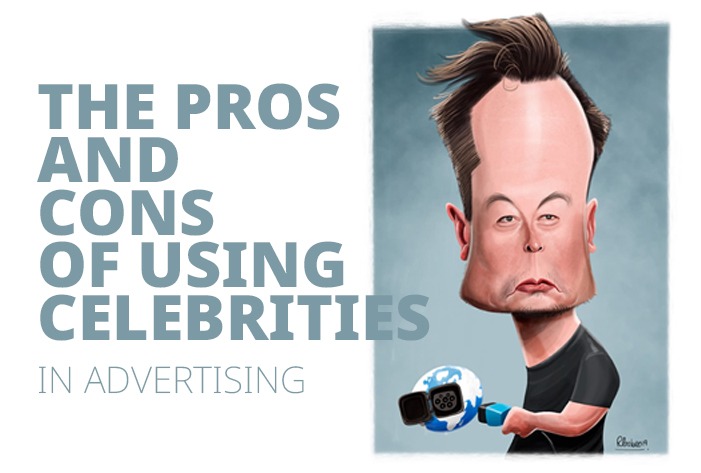
Celebrity endorsements are common Indian advertising. In a country where film stars, cricketers and digital influencers enjoy massive admiration, linking a brand with a famous personality can instantly drive visibility, trust and desirability. Although, it must be executed carefully, so that it enables brands to leverage fan communities and create emotional connections that conventional advertising struggles to achieve.
Amit Bailke
The desire to distinguish yourself in a sea of similar brands through bold, disruptive work has become a blanket claim, since only a few actually do so. Most of the envelope-pushing work agencies develop never reaches the client — it dies a silent death within the agency, in a cycle fed by both sides. The lack of courage lies with neither the client nor the agency, but with both.
 Mihir Modak
A new client has been onboarded and says, “Surprise us. No idea is a bad idea.” At first glance, this is the dream brief: no red tape, no strict obligations, pure creative freedom. But “Surprise me” is an incomplete instruction packaged as a complete one, and it ends up wasting exactly what it was meant to save: time.
Mihir Modak
It takes a lot of effort to make things seem effortless. “Daag Acche Hain” doesn’t sound like a typical tagline — it sounds like an actual conversation, and that is exactly why it works so well. The best taglines don’t sound baked in a creative agency, but that ease comes with hard work.
Mihir Modak