Blog.
What happens when brands focus on getting laurels instead of fulfilling their customers' wants?
In 2012, Melbourne Metro released a safety campaign, “Dumb Ways to Die”, to warn people of the dangers near train tracks. It was widely praised, gained critical acclaim, and broke records at the Cannes Lions Festival. The song charted, and the video had hundreds of millions of views.
Later, safety research analysts studied the actual incident data from the Melbourne rail network. They noticed only a small drop in near-misses and accidents, and some analysts questioned whether the campaign actually changed people’s behaviours.
While the campaign was praised, the rail authorities faced the same safety issues.
Two Different Rooms, Two Different Scoreboards
A creative team has one audience in mind when presenting to a client. But when they come under the eyes of festivals and accolades, they begin addressing a different audience: a panel of creative directors who judge based on craft, originality, and cultural impact.
These are two distinct audiences with distinct judgment matrices. Clients judge based on higher sales, better recall, or a bigger market share. Juries, however, look for ideas that push boundaries, move people, or hit a particular creative nerve, regardless of whether they reach the target audience.
Most campaigns don’t have to choose between these two goals, but some do, and that’s what creates tension between them.
Why This Happens
Winning awards does more than just boost an agency's ego. When an agency wins an award like a Cannes Lion, it showcases that win on its website, highlights it in business pitches, and uses it to attract top creative talent. This drive is built into how an agency grows, hires and gets newer, better clients.
In every brief, there's subtext and subtle pressure to build a critically acclaimed campaign. A campaign that focuses on virality and cultural clout might fulfil all jury criteria without having much effect on a client’s needs at the end of the quarter.
No one goes into campaign creation with surface-level intentions. A creative director might honestly believe that an award-winning idea might not exist in a vacuum and will definitely lead to good business for the client, and sometimes it is true. This alignment isn't organic every time, and assuming it is is how campaigns become aesthetically pleasing but lacking in tangible results.
The Work That Doesn’t Get the Trophy
Let’s look at the other side; the pattern becomes clearer then. Comparing ‘Dumb Ways to Die’ with a generic retargeting campaign, over a year, organically boosting a D2C brand’s repeat customer rate by double digits.
This generic campaign delivers cold, hard results, but it will never win a Cannes Lion because it might not be visually creative, might not push boundaries, doesn’t feature a catchy jingle, and no one outside the client’s finance team will ever revisit it. This kind of work is described as ‘solid’ but isn’t praised, even though it has fulfilled the exact function it was meant to perform.
Creative ideas that shape cultures have special, flowery terms, but far fewer words are used for plain ideas that simply boost revenue, showing what a ‘reputation-first’ industry truly values.
Style over Substance
CRED’s IPL ads are a strong example in India. Ads with Rahul Dravid, Katrina Kaif, and Jim Sarbh in 2021 & 2022 sparked a lot of conversation during the season and were widely shared for their offbeat humour and celebrity choices.
Marketers and journalists covering this campaign pointed out one issue: many viewers could refer to the ad, describe it in detail, but couldn’t articulate what CRED actually did. While the ad was catchy, quotable and memorable, the main goal was to make CRED's value clear to a new customer, which was overshadowed by style. While CRED got attention, whether the campaign led to a better understanding of CRED’s core capabilities is a different question altogether.
Can an idea perform both roles?
Simply put, it sometimes can. The Old Spice campaign, ‘The Man Your Man Could Smell Like’, got a lot of industry attention and also led to a huge, quantifiable sales boost for a brand that felt left behind at the turn of a new generation. Ariel’s ‘Share the Load’ won awards in India and actually became a conversation starter and perspective changer around how people talk about and do laundry.
Final Word
A campaign's results, whichever one, matter to someone. A trophy shows what creative contemporaries thought about a concept; a client’s dashboard shows how millions of customers behaved over a period of time. The real cost, however, appears when it is unclear which result the campaign was meant to influence.
Tags:
Blogs
More Stories
In India’s dynamic business landscape, a brand is far more than its logo, tagline, or colour palette. It’s the sum of promises kept, experiences delivered, and trust earned over time. Whether it’s a Bengaluru fintech startup or a century-old textile house in Surat, brands that thrive are those that go deeper than design — they live in the minds and hearts of their customers.
 Amit Bailke
In today’s noisy marketplace, your brand isn’t just competing with other businesses – it’s competing with every post, ad, and notification that distracts your audience. That’s why the advertising agency you choose can be the single most important decision for your marketing success.
Amit Bailke
Many marketing projects derail not because the agency lacks talent, but because the client didn’t clearly define what they needed in the first place. Think about it — if your team and your agency aren’t aligned on the starting point, the goal, and the parameters, you’ll waste time, burn budget, and risk getting work that doesn’t hit the mark.
Amit Bailke
We’ve all wondered at some point — does branding really make that much of a difference? A common myth is that branding is only for big companies with deep pockets. In reality, it’s not rocket science. When brands make informed, consistent decisions, consumers feel more confident engaging with them
Amit Bailke
We’ve all wondered at some point — does branding really make that much of a difference? A common myth is that branding iHumour has always held a special place in Indian marketing. From Amul’s iconic topical billboards to Fevicol’s legendary one-liners, humour has shaped the way brands win hearts in this country. Humour isn’t just a creative choice—it has become a strategic tool for brands looking to cut through overwhelming digital noise.
Amit Bailke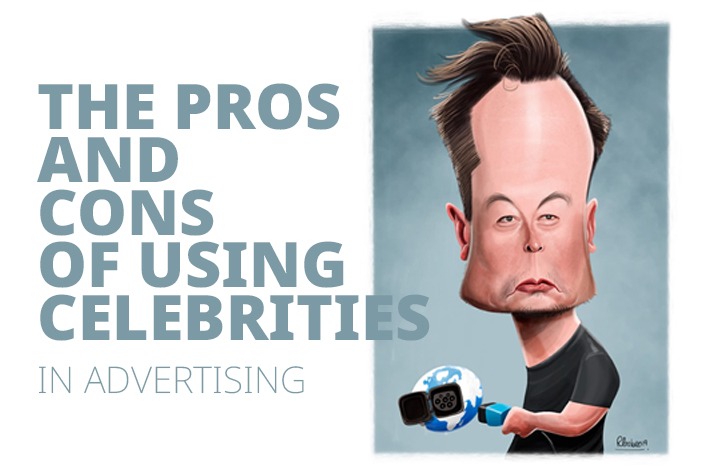
Celebrity endorsements are common Indian advertising. In a country where film stars, cricketers and digital influencers enjoy massive admiration, linking a brand with a famous personality can instantly drive visibility, trust and desirability. Although, it must be executed carefully, so that it enables brands to leverage fan communities and create emotional connections that conventional advertising struggles to achieve.
Amit Bailke
The desire to distinguish yourself in a sea of similar brands through bold, disruptive work has become a blanket claim, since only a few actually do so. Most of the envelope-pushing work agencies develop never reaches the client — it dies a silent death within the agency, in a cycle fed by both sides. The lack of courage lies with neither the client nor the agency, but with both.
 Mihir Modak
A new client has been onboarded and says, “Surprise us. No idea is a bad idea.” At first glance, this is the dream brief: no red tape, no strict obligations, pure creative freedom. But “Surprise me” is an incomplete instruction packaged as a complete one, and it ends up wasting exactly what it was meant to save: time.
Mihir Modak
It takes a lot of effort to make things seem effortless. “Daag Acche Hain” doesn’t sound like a typical tagline — it sounds like an actual conversation, and that is exactly why it works so well. The best taglines don’t sound baked in a creative agency, but that ease comes with hard work.
Mihir Modak
The 30-second ad was the standard for advertising for as long as anyone can remember. Budgets, briefs, and strategies were designed around it. Today, attention is split between reels, shorts and stories, and most ads get their verdict within the first two or three seconds.
Mihir Modak
In 2009, IKEA swapped Futura for Verdana. The products and the copy were unchanged, but a brand famous for thoughtful design suddenly felt generic. Typography is the first impression your brand makes, and it gets read before a single word does.
Mihir Modak
“Dumb Ways to Die” broke records at Cannes Lions, yet the rail network saw only a small drop in near-misses. Clients and juries keep different scoreboards, and trouble starts when it is unclear which one a campaign was meant to win.
Mihir Modak
Open any e-shopping platform and the customer reviews describe the product better than the brand copy ever did. The three- and four-star reviews are where people explain themselves, in exactly the friend-to-friend register a good ad is trying to reach.
Mihir Modak